

ZED Box series
Not sure which device fits your application? See Choosing Your Hardware for the camera, lens and host recommended for common applications, or follow Choose your ZED Box.
ZED Box devices
The ZED Boxes are ready-to-use embedded PCs for ZED cameras, based on NVIDIA® Jetson™ modules with native GMSL2 connectivity.
-
ZED Box 2 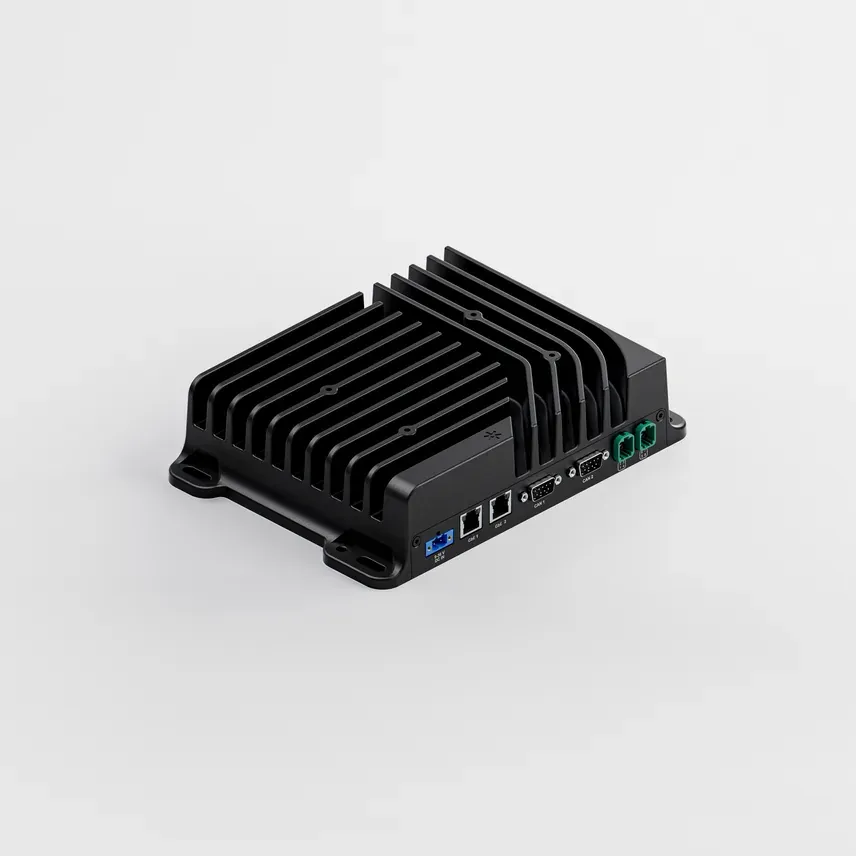
-
ZED Box 2 Max 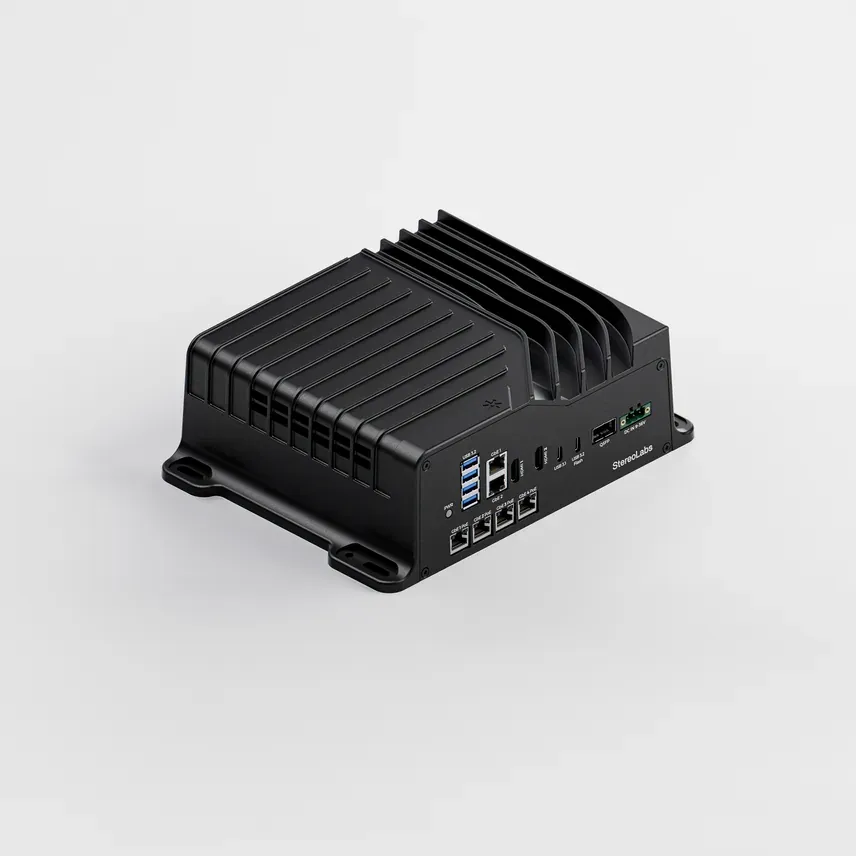
-
ZED Box Mini Mini Carrier Board 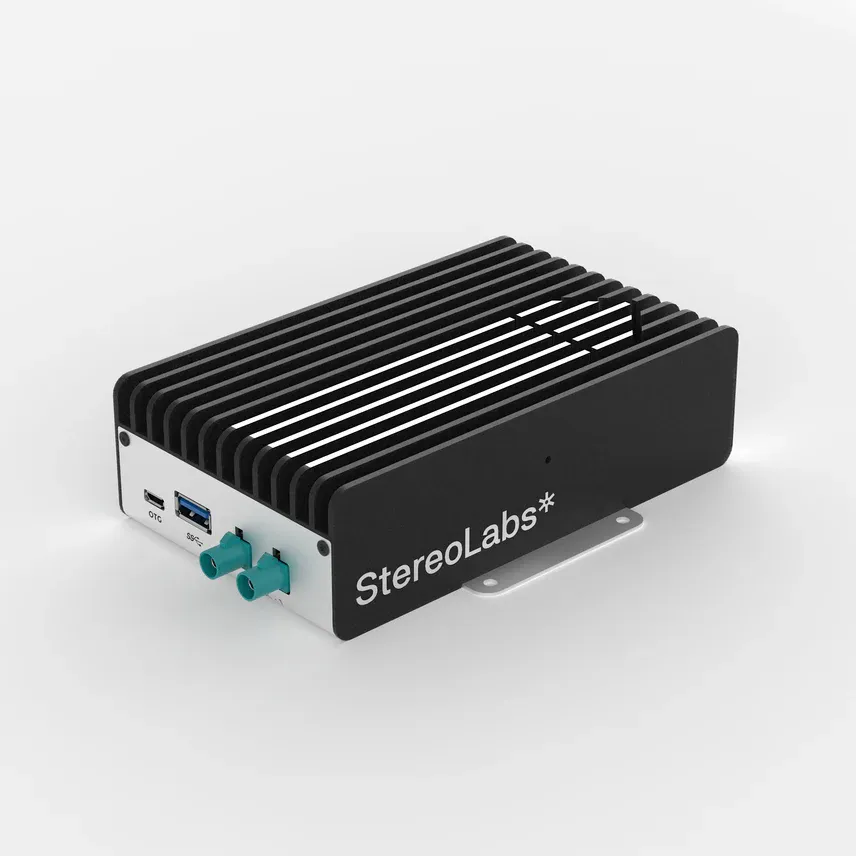
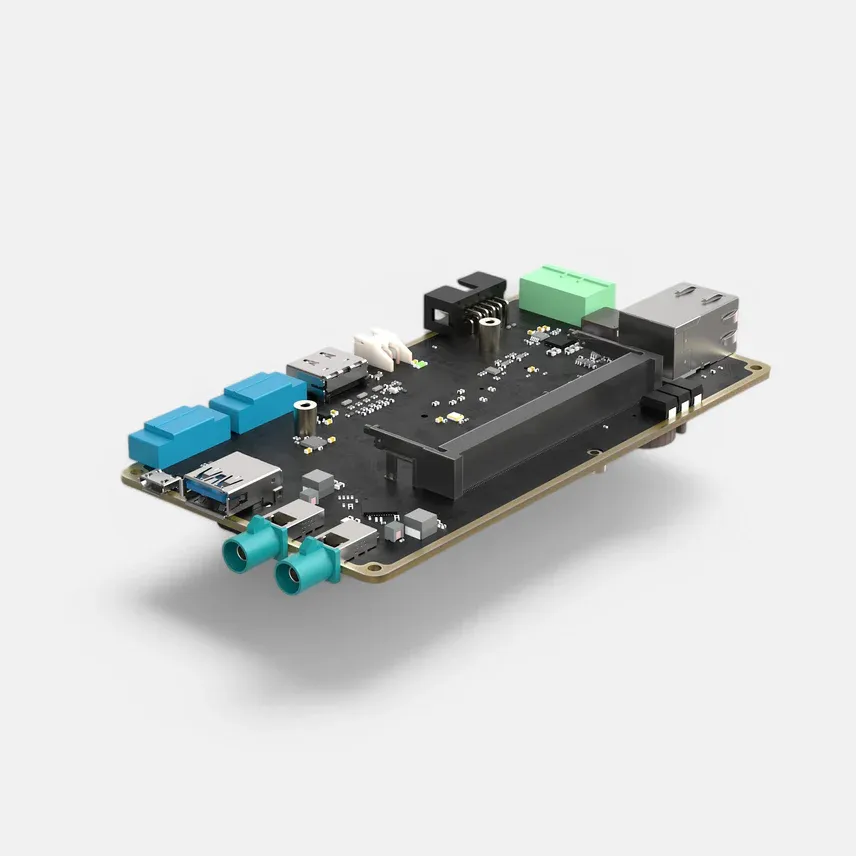
-
ZED Box 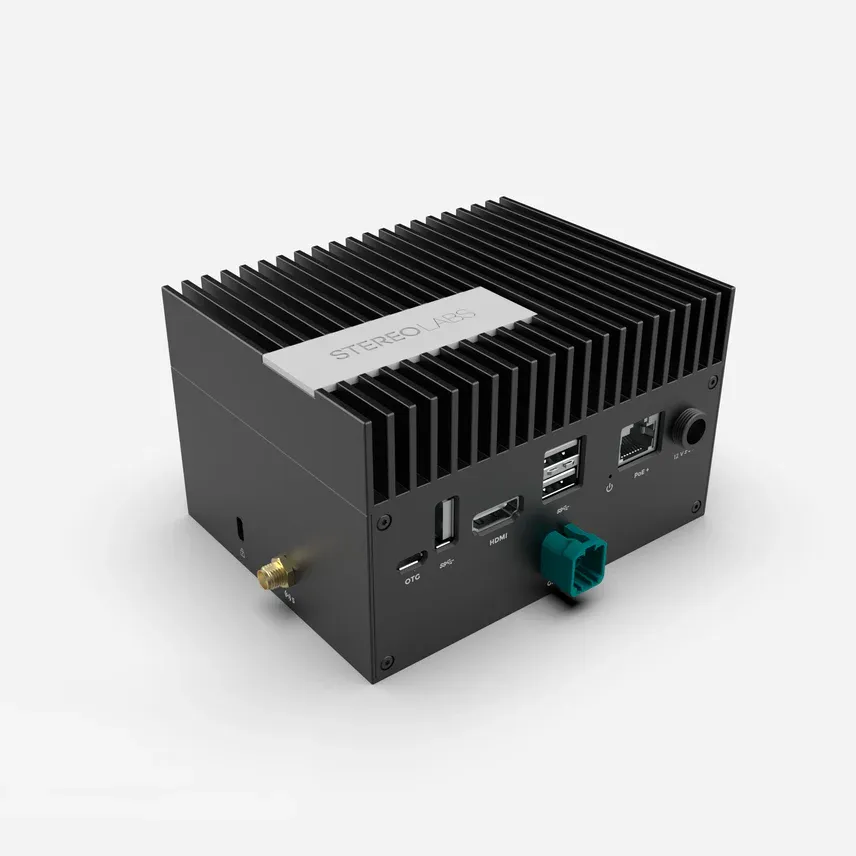
Choose your ZED Box
The following sections help you choose the host for your cameras: a ZED Box 2, a ZED Box 2 Max, a ZED Box Mini, a ZED Box, a Mini Carrier Board, or a Jetson Developer Kit with a ZED Link capture card.
| If you need… | Consider | |
|---|---|---|
| A host for most applications: up to eight GMSL2 cameras, CAN, multi-device synchronization, and a 10 V to 32 V input for vehicles and robots | ZED Box 2 (recommended) |
| The most demanding applications: humanoids, large AI models, many sensors, with Jetson Thor | ZED Box 2 Max |
| A compact and cost-effective host for one or two GMSL2 cameras | ZED Box Mini |
| A system powered by a single PoE+ cable, with optional GNSS capability, and flexible SSD size options | ZED Box |
| A light board to integrate in your own enclosure, or to reuse a Jetson module you own | Mini Carrier Board |
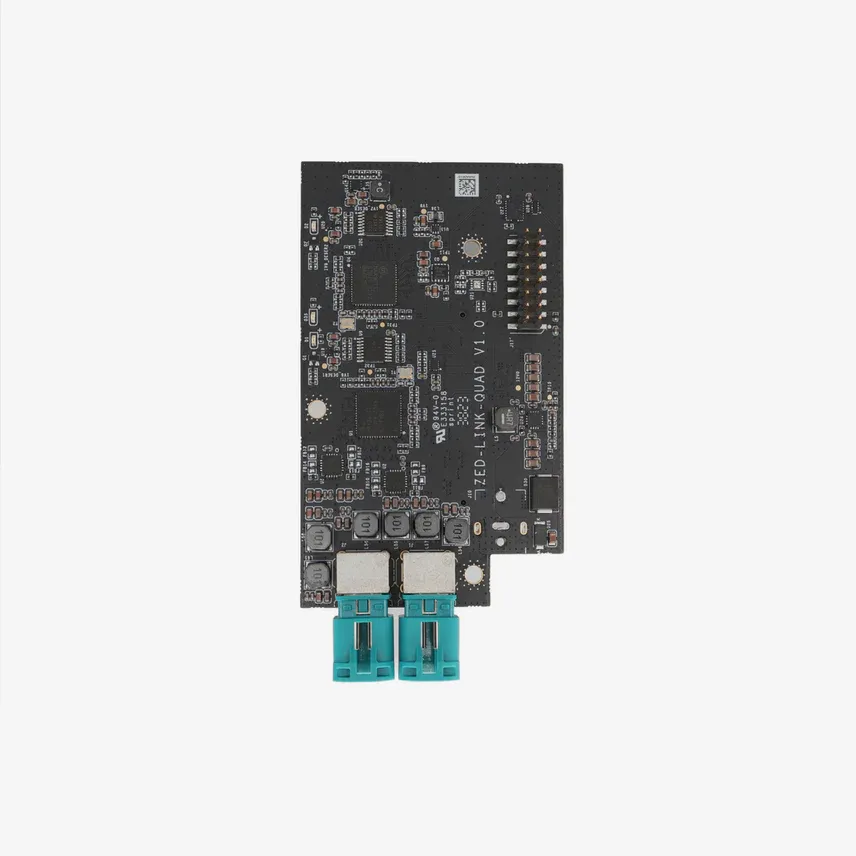 | To add GMSL2 cameras to a Jetson Developer Kit | Jetson Developer Kit with a ZED Link card |
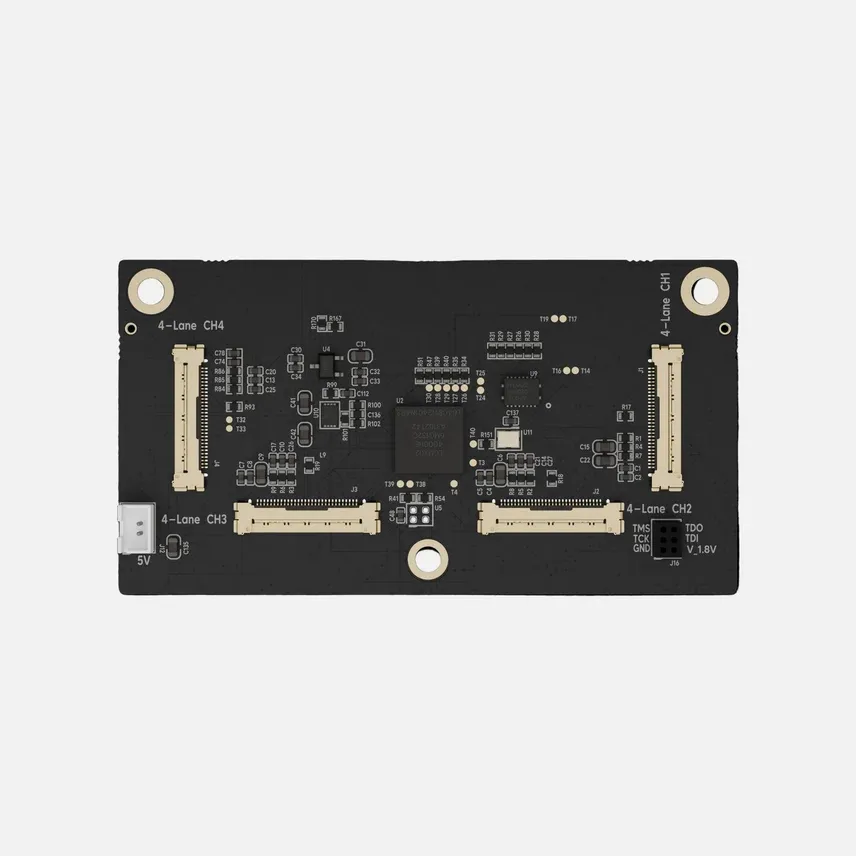 | A light multi-camera system with bare monocular ZED X One Core cameras (MIPI CSI-2), for low-latency applications | Jetson Developer Kit with a ZED Link MIPI Quad |
GMSL2 cameras require a Jetson host with GMSL2 connectivity: a ZED Box, or a Jetson Developer Kit with a ZED Link capture card. The ZED 2i and ZED Mini USB 3 cameras work with a ZED Box, but also with a Windows or Linux PC equipped with an NVIDIA® GPU. See Choose your camera to choose the camera first.
Compare the ZED Boxes
ZED Boxes ship with a pre-configured operating system, including the ZED SDK and the GMSL2 driver.
Choose the ZED Box 2
The ZED Box 2 is the recommended host for most applications:
- Up to eight GMSL2 cameras: eight stereo cameras at 30 fps in HD1200, four at 60 fps, or up to four ZED X One 4K.
- Vehicles and robots: the 10 V to 32 V input connects directly to 12 V and 24 V power rails, and the two CAN ports connect to the vehicle or robot controllers.
- Multi-device synchronization: the trigger input and output synchronize the cameras of several ZED Box 2 units, as described in Multi-device synchronization.
- Super Mode on the Jetson Orin NX module, for up to 157 TOPS.
- Low ambient temperatures, down to -20°C.
Choose the ZED Box 2 Max
The ZED Box 2 Max is designed for the most demanding applications, with up to 128 GB of memory on a Jetson Thor module:
- Humanoids and physical AI, and any application that runs large AI models on board, such as vision-language models, next to the perception stack. Multi-Instance GPU (MIG) splits the GPU into isolated instances to run several workloads side by side.
- Many sensors: eight GMSL2 cameras, plus lidars or IP cameras powered by the four optional PoE+ ports, and a QSFP+ port with up to four 10 GbE links for high-throughput networking.
- Global localization, with the optional dual-antenna RTK GNSS receiver, and remote operation over the optional 4G/5G module.
- Wide power input: 9 V to 36 V, to connect directly to 12 V, 24 V, and 36 V power rails.
The ZED Box 2 Max has no external camera trigger connector. To align the data of several devices, synchronize their system clocks, for example with PTP over Ethernet.
Choose the ZED Box Mini
- One or two GMSL2 cameras at full frame rate, in a smaller and more cost-effective device.
- Multi-device synchronization: the trigger input and output synchronize the cameras of several ZED Box Mini units, as described in Multi-device synchronization.
- Direct I/O with CAN, UART and GPIOs, described in Using GPIO.
Choose the ZED Box
For new projects, prefer the ZED Box 2. Choose the ZED Box when you need:
- Power over Ethernet: a single network cable powers the whole system, within the 25.5 W PoE+ budget.
- The GNSS option on a Jetson Orin host, described in Using GNSS.
Frame rate with several cameras
On the ZED Box Mini, each GMSL2 port runs its camera at full frame rate, for example HD1200 at 60 fps or SVGA at 120 fps.
On the ZED Box 2, each Quad FAKRA-Z connector is driven by its own deserializer, and the cameras on the same connector share its bandwidth. Up to two stereo cameras per connector run at 60 fps in HD1200 and HD1080; with three or four stereo cameras on the same connector, the frame rate is limited to 30 fps. Spread your stereo cameras across the two connectors to keep the maximum frame rate. See Using GMSL with ZED Box 2 for all the supported combinations. The ZED Box 2 Max follows the same rules as the ZED Link Quad capture card: up to two stereo cameras per connector at full frame rate, and up to four ZED X One 4K cameras.
On the ZED Box, the four ports are organized in two groups of two ports. One stereo camera per group runs at full frame rate. With two stereo cameras in the same group, the frame rate is limited to 30 fps in HD1200 and HD1080, and 60 fps in SVGA. See Using GMSL with ZED Box for all the supported combinations.
Mini Carrier Board
The Mini Carrier Board is the board inside the ZED Box Mini, sold without enclosure. It offers the same connectivity as the ZED Box Mini. Choose it to integrate the board in your own enclosure or robot. It is available with a Jetson Orin Nano or Orin NX module, or without a module if you already own one.
The Mini Carrier Board requires a Jetson compute module to operate. It is not a standalone product.
Jetson Developer Kit with a ZED Link capture card
A ZED Link capture card adds GMSL2 or MIPI CSI-2 camera inputs to an NVIDIA® Jetson™ Developer Kit. Choose this option when the ZED Boxes do not cover your needs:
- A Jetson Developer Kit you already own, for example a Jetson AGX Orin, with a ZED Link Duo or ZED Link Quad.
- ZED X One Core cameras: these MIPI CSI-2 cameras require a ZED Link MIPI Quad, and are not compatible with the ZED Boxes.
The table lists the Developer Kits supported by the current ZED SDK, which runs on Jetson Orin and Jetson Thor platforms. See the Recommended Specifications for ZED SDK.
A Developer Kit is designed for development: for deployment, plan the enclosure, cooling and cabling of your system, or contact support@stereolabs.com about other Jetson carrier boards.
Next steps
- Set up your device: ZED Box 2, ZED Box 2 Max, ZED Box Mini, ZED Box, ZED Link GMSL2 capture cards or ZED Link MIPI capture cards.
- Plan a system with several cameras: Multi-Camera.
- Tune the power consumption of the Jetson module: ZED Box 2, ZED Box 2 Max, ZED Box Mini and ZED Box power modes.